
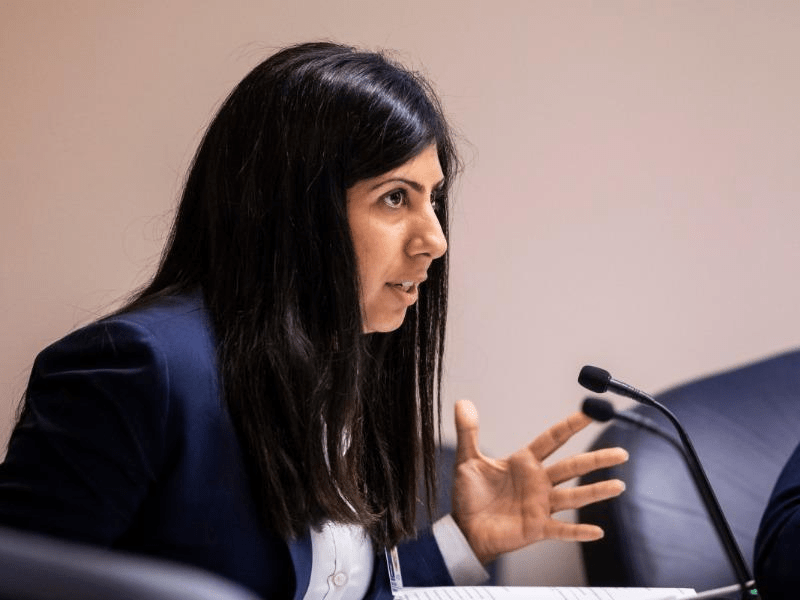
With Florida’s “alternatives-to-abortion” program slated to receive an extra $4.5 million in funding this year, Democratic State Representatives Kelly Skidmore of Delray Beach and Anna Eskamani of Orlando are renewing an effort to better regulate the anti-abortion pregnancy centers, also known as crisis pregnancy centers, that the state program helps fund.
“Crisis pregnancy centers (CPCs) operate with little to no oversight while receiving millions of public dollars annually — money that could otherwise go toward legitimate, evidence-based health care,” Eskamani told Orlando Weekly in a statement. “At a minimum, we should ensure these centers comply with basic standards, do not share medically inaccurate information, and use funds appropriately,” she continued. “This bill is not about targeting CPCs — it’s about protecting patients and taxpayers.”
House Bill 63, titled Pregnancy Support and Wellness Services, would require organizations that contract with the Florida Pregnancy Care Network, an anti-abortion nonprofit that oversees the state’s alternatives to abortion program, to comply with basic regulatory guidelines.
Tax filings show that historically, these organizations have included religious nonprofits such as Catholic Charities, as well as crisis pregnancy centers — facilities that often pose as abortion clinics but instead aim to convince pregnant people not to obtain abortion care. They offer free pregnancy tests and ultrasounds, but when discussing a pregnant person’s options, the information on abortion they offer is either false or nonexistent.
Under Eskamani’s co-sponsored proposal, organizations that receive state funds through the FPCN would be required, for instance, to ensure informational materials given to clients are “medically accurate,” as crisis pregnancy centers have in some instances been found to share blatant inaccuracies, such as tying abortion to a heightened risk of cancer or telling patients they are farther along in their pregnancy than they really are.
Organizations that fail to comply with this requirement would face fines for noncompliance, under the proposal. It would also require the Florida Department of Health to perform annual financial audits of crisis pregnancy centers that receive state money, and to visit each organization at least annually, unannounced, to determine compliance with its contractual obligations.
As part of a bill last year that established Florida’s six-week abortion ban, the Florida Pregnancy Care Network was allocated a five-fold increase in its funding for this program, from $4 million in 2022 to $25 million in 2023. All of this generally goes towards supporting or otherwise marketing crisis pregnancy centers, which critics have described as predatory and manipulative. This year’s state budget gifts the program $29.5 million.
Eskamani, a former employee of Planned Parenthood, said the overarching aim of HB 63 — to be considered during the 2025 state legislative session — is simply “accountability” and “truth in healthcare.”
“Crisis pregnancy centers receive millions of taxpayer dollars, so it’s only reasonable that they meet basic standards of financial transparency and operational compliance, just like any other publicly funded program,” said Eskamani, who recently announced a run for Orlando mayor, after her current two-year term in the Florida House is up.
“Supporting this bill means standing for integrity, fiscal responsibility, and patient protection — principles that should unite us,” she argued.
Whether it will go anywhere is anyone’s guess.
It’s identical to legislation that Florida’s Republican-controlled Legislature neglected to take up last year, similarly filed by Skidmore and Lauren Book in the state Senate. In order to pass, or even be considered for approval, state legislation has to wind its way through two to three committee hearings, which offer opportunities for public comment and discussion among state legislators as to the merits of the proposal.
Book and Skidmore’s bills to establish more requirements for CPCs died in their respective chambers last year, after committee chairs failed to schedule them for a single hearing.
Florida’s 2025 legislative session begins March 4, 2025 in Tallahassee and will last 60 days.
This story first appeared at our sister publication Orlando Weekly.
Subscribe to Creative Loafing newsletters.Follow us: Google News | NewsBreak | Reddit | Instagram | Facebook | Twitter
This article appears in Dec 19-25, 2024.